In recent years, it has become a tradition for us to reflect on the past year as we look forward to the new one. Some years we celebrated giant steps forward, such as Illinois’ passage and subsequent implementation of the Pretrial Fairness Act. In others, we recognized the work of hundreds of pretrial practitioners, who in ways small and large, made their systems more fair, just, and effective.
This year, just as we began reflecting on 2025, Timothy Schnacke announced his retirement on the APPR Community. He is such a giant of the pretrial field that we and many others know him simply as Tim.
We cannot think of a better way to look forward than to honor Tim and his remarkable contributions to the field of pretrial justice.
Our work stands on his shoulders and on the shoulders of others. As a legal analyst, author, historian, and advocate for evidence-based policies and practices, Tim has inspired us and countless other pretrial practitioners, advocates, and researchers to remain focused on American legal principles and evidence-based improvements.
Foundational Work
Tim has researched and written seminal publications on bail and pretrial justice. If you have not read Fundamentals of Bail, download his paper immediately. Yes, it is that important. As Tim wrote in that paper, if we want to advance effective pretrial justice, it is essential that we have a common understanding about the history of bail, fundamental legal principles, pretrial research, national standards on pretrial release and detention, and how we define basic terms and phrases.
We are not naïve about the challenges. Many jurisdictions continue to use outdated practices, many with a very loose, if any, connection to American legal principles or the research on what works and what is not effective.
Despite the challenges we saw in 2025, we remain motivated and optimistic. Through Tim’s example, and through our collaboration with all of you, we know that legal, evidence-based, and data-driven pretrial justice is the path forward.
Of course, Tim would not leave us without a final gift: Bipartisan Bail Reform: Three Pillars of Pretrial Justice. It could not be more timely.
Dissatisfaction With the Status Quo
In doing research for his latest publication, Tim found that virtually every state was involved in some effort, from simple to complex, to “align their laws, policies and practices to reflect various aspects of ‘pretrial justice.’” This reflects widespread dissatisfaction with how most pretrial systems around the country actually work.
However, in some cases, we have seen this frustration come in the form of efforts to reduce the right to pretrial release and broaden courts’ ability to detain. Sometimes this is done by requiring financial release conditions for a broader number of offenses, creating presumptions in favor of detention, or increasing the list of offenses eligible for detention but without constitutionally necessary due process protections.
Without careful, limited, and intentional decisions about pretrial release or detention, and about conditions of release, we risk maintaining the status quo—relying on financial release conditions to determine who is detained and who is released, and undermining the presumption of innocence, due process, and the right to physical liberty—or even passing counterproductive laws that not only don’t improve court appearances and community safety but actually make those outcomes worse.
Getting to Intentional Pretrial Decisions
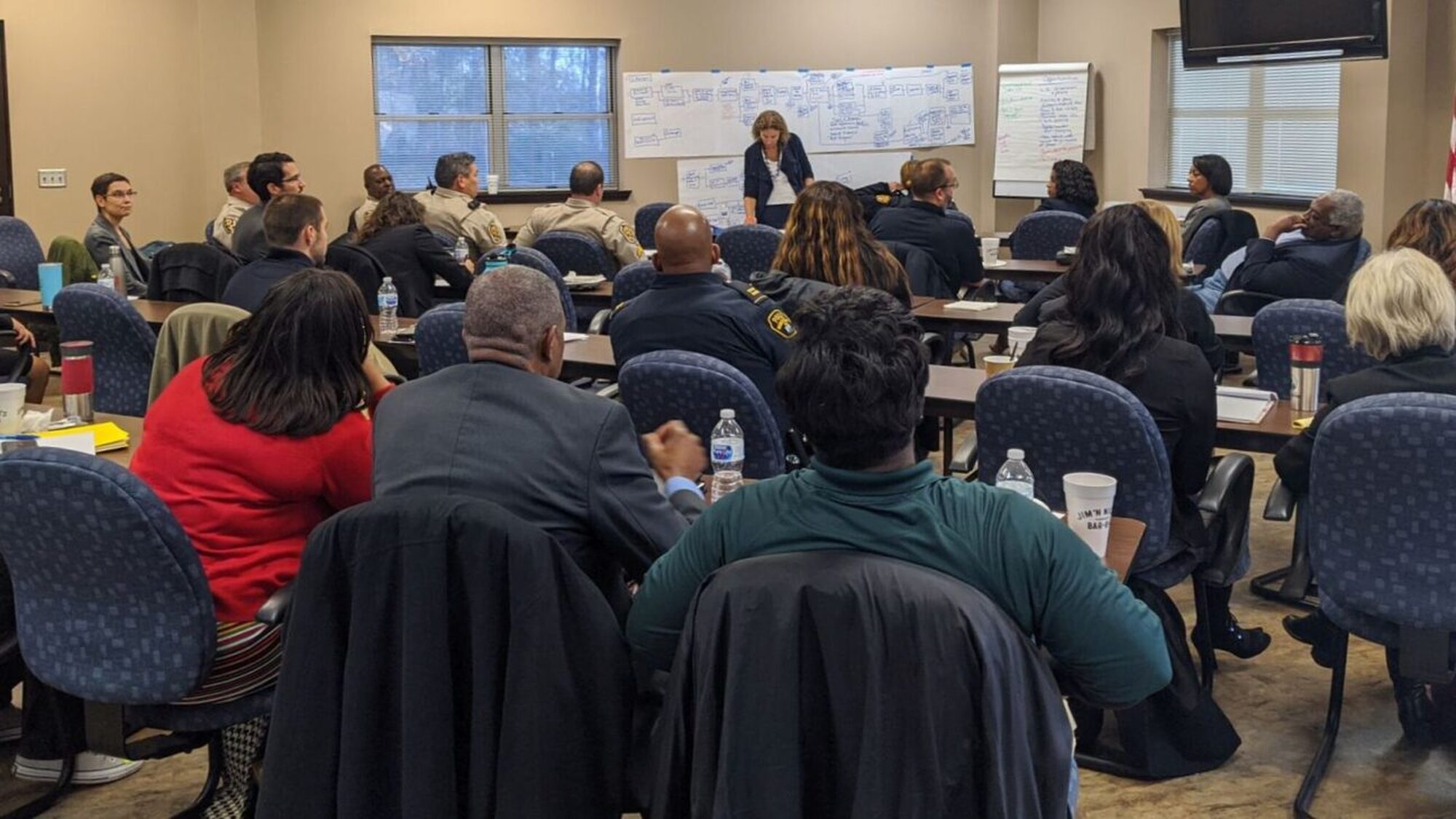
This is why Bipartisan Bail Reform is so important at this time. Tim reminds us of what he calls the three pillars of bipartisan bail reform: collaboration, education, and intentional release and detention decisions. If you’re familiar with APPR’s work, you know we believe all three of these elements are foundational to effective advancements.
As we head into the new year, we wanted to highlight Tim’s call for all of us, when reforming our pretrial systems, to proceed in a deliberate way. Without the collaboration of a very broad base of stakeholders and some basic understanding of the law, the meaning of “bail,” and pretrial research, we will continue to spin our wheels. But, by focusing on Tim’s three pillars, we can achieve pretrial justice in which decisions are informed and intentional, where decisions consider risk of flight and community safety, and where pretrial release or detention is not based on wealth.
Pretrial is the front door to the criminal legal system. As Berkeley law professor Caleb Foote wrote in 1956, “Pretrial decisions determine mostly everything.” Whether or not someone is detained while awaiting trial has major impacts on whether they are found guilty, whether they are sentenced to incarceration, and how long their sentence is. Unnecessary detention not only disrupts lives, leading to lost jobs and housing, and to family instability, but it also increases the likelihood of a new arrest.
So, let’s heed Tim’s advice: let’s redouble our efforts to bring together our system and community stakeholders in meaningful ways. Tim explains how we can broaden our outreach to policymakers, researchers, and advocates. We know, having led collaborative policy teams, that this work can be difficult. We have to approach conversations with humility, acknowledge stakeholder concerns, and remain calm when faced with hostile questions.
The next step is to begin to educate everyone on foundational legal principles, pretrial research, and what we know about evidence-based pretrial policies and practices. Collecting and analyzing data can help people get a picture of how their system currently operates and where it can be improved.
States that Laid the Foundation
We often point to Illinois and New Jersey as the best examples to date of informed and intentional pretrial decision-making. However, their journeys toward pretrial reform were long.
Both states took years to transform their pretrial systems by pulling together large stakeholder groups. They studied their systems, and they analyzed and published data and reports about their laws and pretrial research.
After drafting new laws, enacting them through legislation and constitutional amendment, and implementing them, they weathered vociferous attacks, including paid campaigns to stoke fear and racism. But because both states had laid a foundation in advance, there was a strong base of pretrial practitioners, researchers, community members, advocates, people with lived experience, and policymakers willing to stand firm. Today, few, if anyone, would choose to return to the old money-based system.
Collaboration and education are not easy. But when they are done well—even if it takes years (yes, years)—we can move toward justice, improving outcomes, enhancing community safety and well-being, and helping pretrial systems work more effectively and efficiently.
Happy 2026
We wish all of you a happy, healthy, justice-filled 2026.
Please join us on the APPR Community in wishing Tim well in his retirement.
Matt & Alison